The Environmental Protection Regulation 2019 (Qld) (EP Regulation) has been amended by the Environmental Legislation Amendment Regulation 2025 (Qld).
The changes to the Regulation include a change as to how particular forms of waste are classified for the purpose of management and disposal.
Prior to the amendment, commercial and industrial waste containing any identified level of per- and poly-fluoroalkyl substances (PFAS) was treated as regulated waste, which attracts specific obligations in respect of handling and disposal. That is, waste was required to meet a ‘zero level threshold’ for PFAS in order to be treated as non-regulated waste under the Environmental Protection Act 1994 (EP Act). That ‘zero-level threshold’ was identified in Part 3 of Schedule 9 of the EP Regulation:
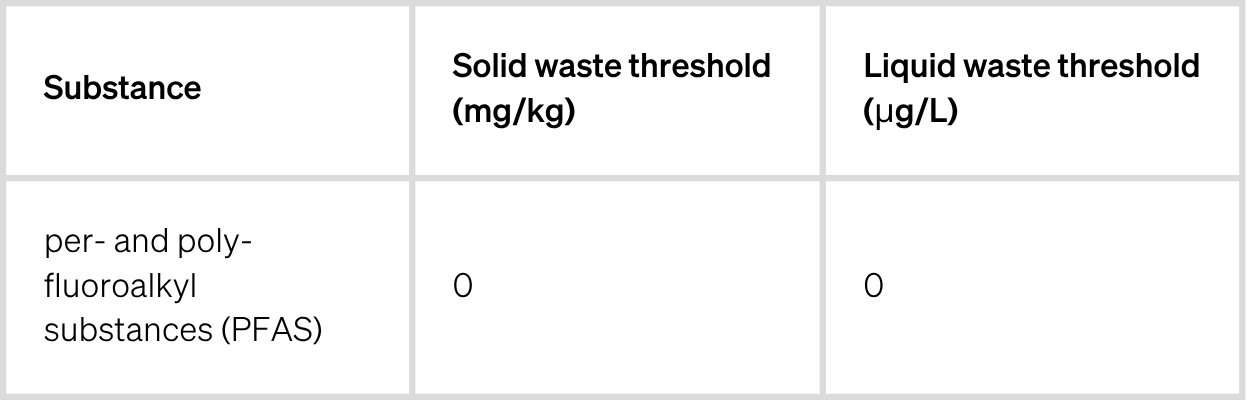
The zero-level threshold did not distinguish between different forms of PFAS.
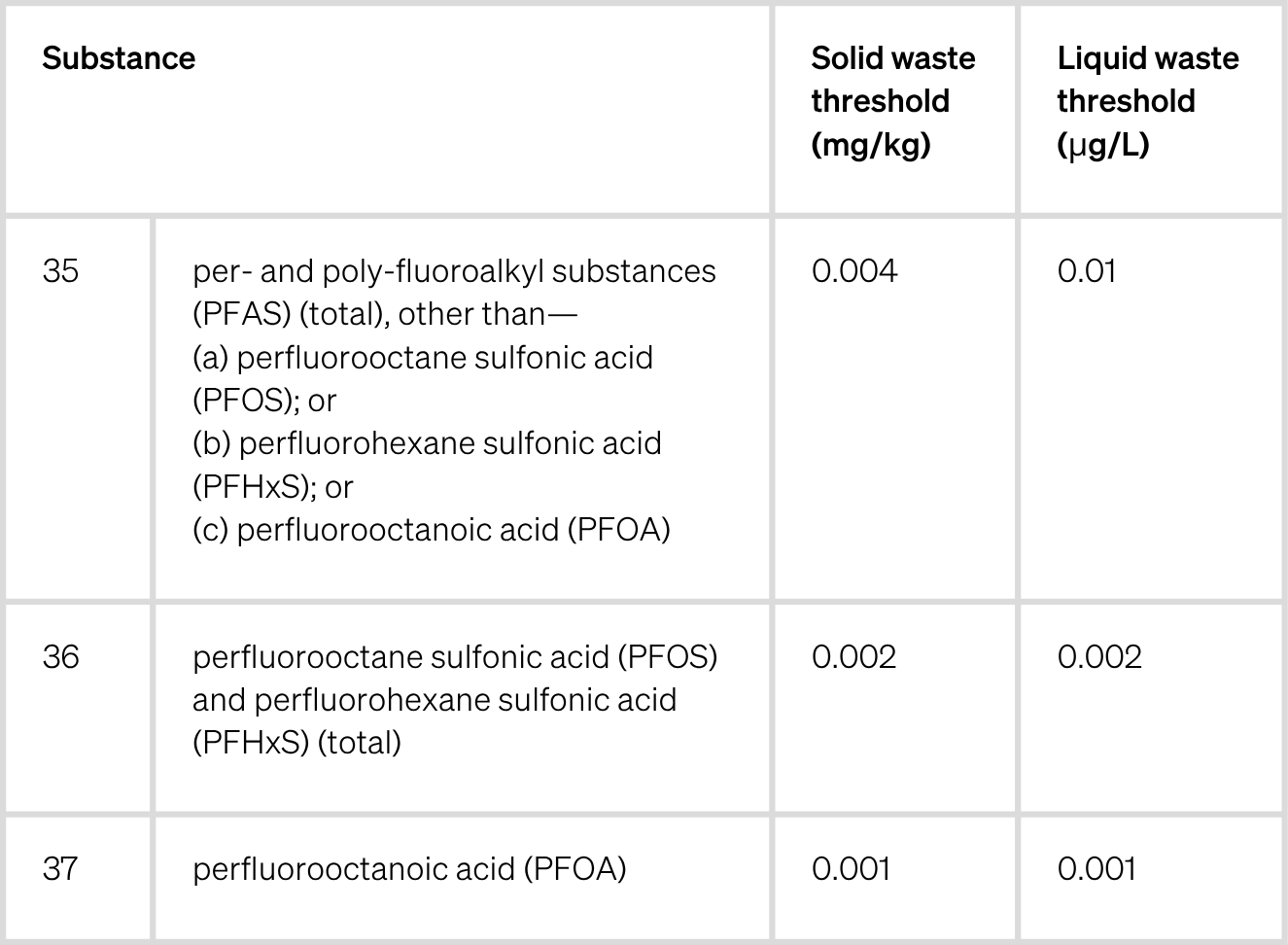
The amendment means that commercial and industrial waste that is shown to contain PFAS below a certain value (identified after testing in accordance with a protocol) can be treated as non-regulated waste. A distinction is also made for the following forms of PFAS which attract lower thresholds for non-regulated waste:
a) perfluorooctane sulfonic acid (PFOS);
b) perfluorohexane sulfonic acid (PFHxS); and
c) perfluorooctanoic acid (PFOA).
Part 3 of Schedule 9 of the EP Regulation now relevantly includes the following thresholds for categorisation as non-regulated waste:
The Explanatory Notes to the amending regulation confirm ‘the obligations for the appropriate management, processing, treatment or disposal of general waste to protect environmental values and human health are maintained…[including] the general environmental duty and the requirement to obtain any relevant environmental authorities under the EP Act for environmentally relevant activities for general waste.’
The changes reflect evolving understanding around the extent of PFAS in the environment and appropriate management of it, and are directed at ensuring that ‘the EP Act is contemporary and balancing the environmental risks of an activity with community benefit’.
You can download a PDF version of our Insight by clicking on the following link: