The recent judgment delivered by the New South Wales Court of Appeal in Transport for NSW v Hunt Leather Pty Ltd; Hunt Leather Pty Ltd v Transport for NSW [2024] NSWCA 227 addresses an important question of whether the tort of nuisance can be alleged due to delays in completion of a statutory construction project. Notably, this decision covers a myriad of issues, inclusive of the dismissal of a cross-appeal relative to litigation funding.
Key Takeaway Points
- A year-long delay to a statutorily authorised construction project is unlikely to be viewed as a nuisance, due to the sheer importance and complexity of these projects.
- The Court was also reluctant to find that Transport for NSW should have attempted to substantiate with exactitude the delay that could arise from unknown underground utilities, on the basis that this exercise (of finding the unknown utilities) would itself have possibly resulted in a substantial and unreasonable interference to nearby premises.
The appellant presented eleven grounds of appeal, ranging from whether the primary judge incorrectly found that there was a nuisance, application of s 43A of the Civil Liability Act 2002 (NSW), whether any nuisance resulting from construction was inevitable, whether the primary judge erred in finding that the appellant did not use reasonable care, among many others. Ten of the eleven grounds of appeal were unsuccessful. However, the ground alleging the incorrect finding of nuisance was upheld by the Court of Appeal. This successful ground of appeal is the focus of this case update due to its implications for common law claims resulting from delay in construction projects.
Background facts
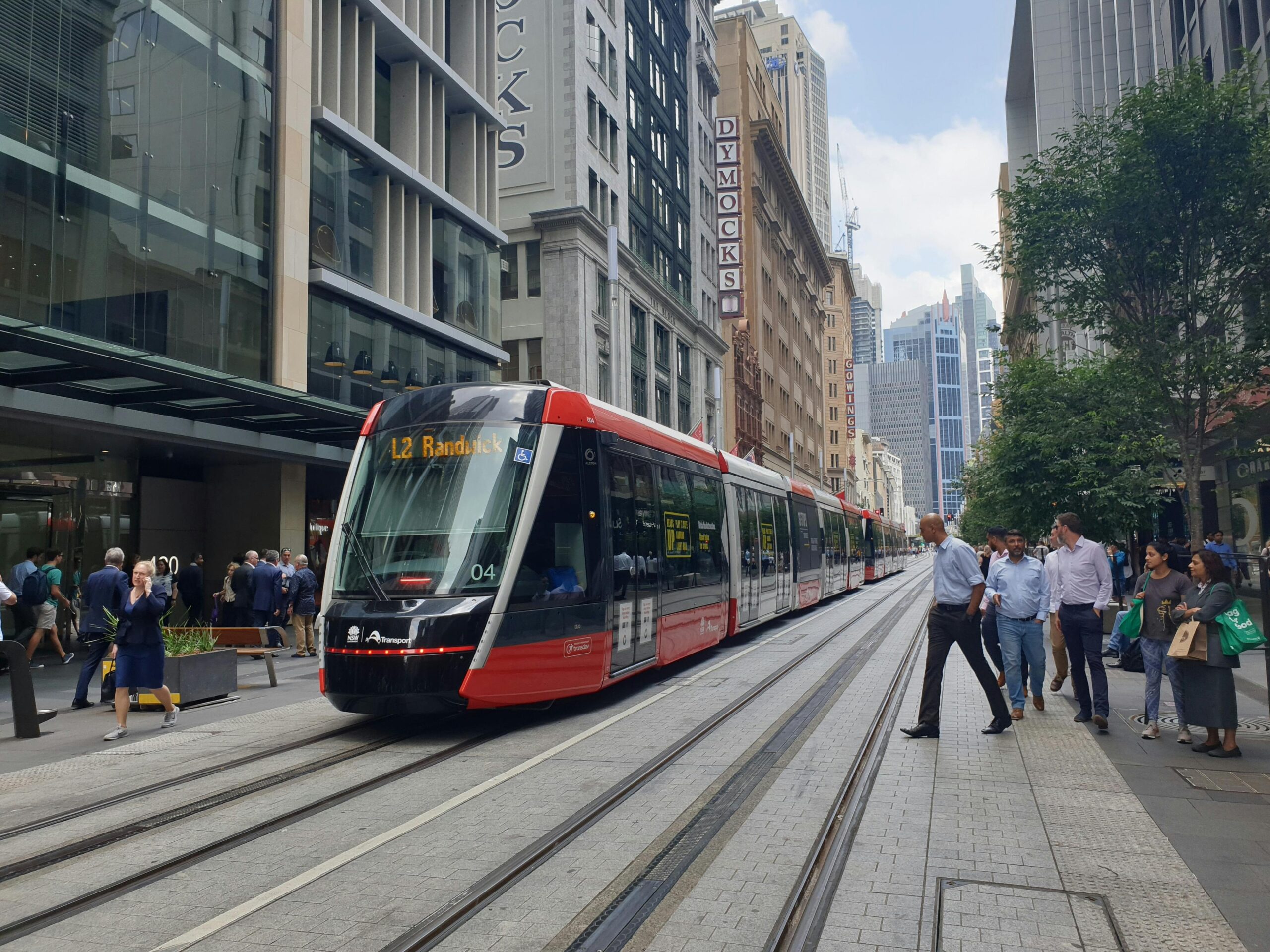
Transport for NSW (TfNSW) entered a design and construct contract with ALTRAC and OpCo (collectively the partnership) in December 2014 for the purposes of the Sydney Light Rail. Construction was planned to occur in thirty-one stages, known as “fee zones”, by preparation of an Initial Delivery Program (IDP) aimed at minimising the impacts of the construction on the community and business in the vicinities. A media release stated that major construction was expected to be completed by mid-2018 but the IDP provided for the project to be completed by 16 March 2019. However, the construction was not completed until March 2020, due to delays associated with discovery of unknown utilities along the route.
Original hearing
In the trial division, Hunt Leather initially claimed that both private and public nuisance had occurred because of the impacts of the delay (based on the timelines in the IDP) on their business. An amended IDP was tendered as evidence in the original hearing, which accounted for the length of time construction would take, even considering the underground utilities. This document also allowed for other contingencies in the construction, such as inclement weather, unlike the original document. The primary judge reasoned that the amended IDP was a suitable tool for determining at what point a nuisance had occurred, and thus Hunt Leather initially succeeded in their nuisance claim. TfNSW subsequently appealed this finding, amongst many other grounds of appeal.
Key issue on appeal
On appeal, the main issue was whether TfNSW could be liable for private nuisance because their contractors exceeded the timeframe for the undertaking of work that was contained within the amended IDP for particular fee zones. This included fee zone 5 which impacted Hunt Leather. The amended IDP provided work would begin on 15 October 2016 and finish on 1 November 2016. The work in this zone did not conclude until 3 December 2017.
Decision
Their Honours reversed the decision of the primary judge based on the first ground of appeal, determining that Hunt Leather did not prove nuisance, as they had not led sufficient evidence that the delay caused an unreasonable interference (noting that the interference must be both substantial and unreasonable to satisfy the tort of nuisance).
Reasoning and findings
The Court of Appeal found that the initial IDP could not be utilised as a reasonable estimate of construction time in a fee zone due to the fact it did not make allowance for contingencies, such as inclement weather or discovery and treatment of unknown utilities. Whilst it was regarded as appropriate for a general media release, it could not be regarded as an enforceable reasonable estimate of construction time within the fee zones.
In considering the amended IDP, the Court acknowledged that it did make some allowance for contingencies, which addressed some of the aforementioned issues. However, the extended timeframes that the amended IDP conveyed were based on the premise that no construction was to commence until the underground utilities were completely discovered. The Court identified that thousands of utilities were identified before construction began, but many more were uncovered in construction, noting that there were dozens of utilities on each city block. They reasoned that it was not established that it was possible for TfNSW to determine the quantum of unknown utilities. Even if a mechanism made it possible to obtain such knowledge of the utilities prior to construction, this itself may have amounted to a substantial interference with Hunt Leather’s land.
Remarkably, the Court of Appeal held that even if there was complete knowledge of the utilities and the timeframes to complete construction in the IDP were reasonable, the Sydney Light Rail was a highly complex project. Their Honours were reluctant to make findings that any time a statutorily authorised project exceeds scheduled timeframes, this would amount to nuisance, stating “[i]t cannot be law that construction authorised by statute becomes actionable nuisance if it takes a month or two months or three months longer than scheduled” (at [96]).
The Court of Appeal did not overturn any other findings of the primary Supreme Court judge and rejected the other ten grounds of appeal.
Final remarks
Whilst this decision provides some clarity in relation to common law causes of action concerned with construction and infrastructure projects, it raises the question of when, if ever, a delay would be significant enough to satisfy a private nuisance claim in the case of a statutorily authorised project. Even though in this appeal decision the delay of one year was not considered an unreasonable interference, it appears likely that such benchmarks will be decided on a case-by-case basis considering the calibre of the project and whether it is legislatively mandated.
If you are worried about your position in terms of construction project delay, contact our Commercialisation, Supply and Projects experts to better understand your position and learn how we can assist.